As an affiliate, we may earn a commission from qualifying purchases. We get commissions for purchases made through links on this website from Amazon and other third parties.
The best place to buy drip irrigation supplies is usually a specialty irrigation supplier. These sellers tend to carry more tubing sizes, fittings, filters, pressure regulators, emitters, and repair parts than a general hardware store.
For a small garden or a quick repair, a home improvement or farm supply store can be more convenient. For a large system, an unusual connection, or a system that uses stored rainwater, an irrigation supply house is often the safer choice because matching the parts matters as much as choosing good parts.
Best Places to Buy Drip Irrigation Supplies
Specialty Drip Irrigation Stores
A drip irrigation specialist is a good starting point when you are building a system from scratch.
These stores usually carry:
- Mainline tubing
- Small distribution tubing
- Dripline with built-in emitters
- Individual emitters
- Filters
- Pressure regulators
- Valves
- Hose and pipe adapters
- Tees, elbows, couplings, and end fittings
- Tubing punches and repair plugs
- Timers and other controls
For example, Drip Depot sells drip-specific parts and publishes guides for choosing and connecting them. As of August 2026, it ships within the United States and U.S. territories, although it does not directly ship internationally.
A specialist is especially useful when you need several parts that must work together. You can often stay within one tubing and fitting system instead of trying to combine parts from several stores.
Local Irrigation and Landscape Supply Stores
A professional irrigation supply house can be one of the best places to buy a larger system.
SiteOne, for example, has physical branches and a large drip and micro-irrigation section. Its catalog includes tubing, fittings, emitters, filtration, valves, pumps, and other irrigation parts.
The advantage of a local irrigation supplier is not just the selection. You may be able to bring in an old fitting, piece of tubing, valve, or adapter and compare it directly with the replacement.
That can prevent one of the most common drip irrigation mistakes: buying two parts labeled with similar sizes that do not actually fit together.
Manufacturer-Authorized Dealers
If you already have an irrigation system from a known manufacturer, an authorized dealer can make finding compatible parts easier.
Rain Bird, for example, provides dealer and distributor locators for irrigation equipment.
This route makes sense when replacing:
- Emitters
- Dripline
- Filters
- Regulators
- Valves
- Controllers
- Specialized adapters
You do not always have to use the same brand throughout an irrigation system. However, tubing and fittings deserve special attention because nominal sizes do not always tell you their actual outside and inside dimensions.
Home Improvement Stores
Large home improvement stores are convenient for small and medium-size garden projects.
Home Depot currently carries drip irrigation kits, tubing, fittings, emitters, filters, regulators, and accessories. Lowe's also maintains separate categories for tubing, fittings, emitters, filters, regulators, manifolds, valves, and kits.
These stores are useful when you need a common part quickly.
They can work well for:
- Raised beds
- Patio containers
- Small vegetable gardens
- Flower beds
- Simple system repairs
- Expanding an existing garden system
The main limitation is selection. A store may have plenty of basic tubing and emitters but only a few filter, regulator, or adapter choices.
Farm and Agricultural Supply Stores
Farm supply stores are another useful option, especially for gardens, orchards, greenhouses, and larger properties.
Tractor Supply, for example, currently carries tubing, dripline, fittings, emitters, adapters, manifolds, and complete drip systems.
Agricultural irrigation dealers may be an even better choice for long irrigation runs or larger planting areas. They are more likely to understand issues such as flow, pressure loss, filtration, and multiple watering zones.
Online Marketplaces
Online marketplaces can have a huge selection, but they require more careful shopping.
Pay close attention to:
- Actual tubing dimensions
- Thread type
- Barb size
- Operating pressure
- Emitter flow rate
- Filter connections
- Materials intended for outdoor use
- Replacement-part availability
Avoid choosing a fitting simply because it is described as "1/2 inch." Drip tubing sold under the same nominal size can have different actual dimensions.
That small difference can mean a leaking connection or a fitting that will not go onto the tubing at all.
What Should You Buy for a Basic Drip System?
The exact parts depend on where your water comes from and what you are watering.
A typical faucet-fed system may need:
- A backflow device where required or appropriate
- A filter
- A pressure regulator
- An adapter from the water source to the tubing
- Mainline tubing
- Dripline or individual emitters
- Fittings and end closures
- Stakes or tubing supports
- A timer, if automatic watering is wanted
A pressure regulator lowers incoming water pressure to a range suitable for the drip equipment.
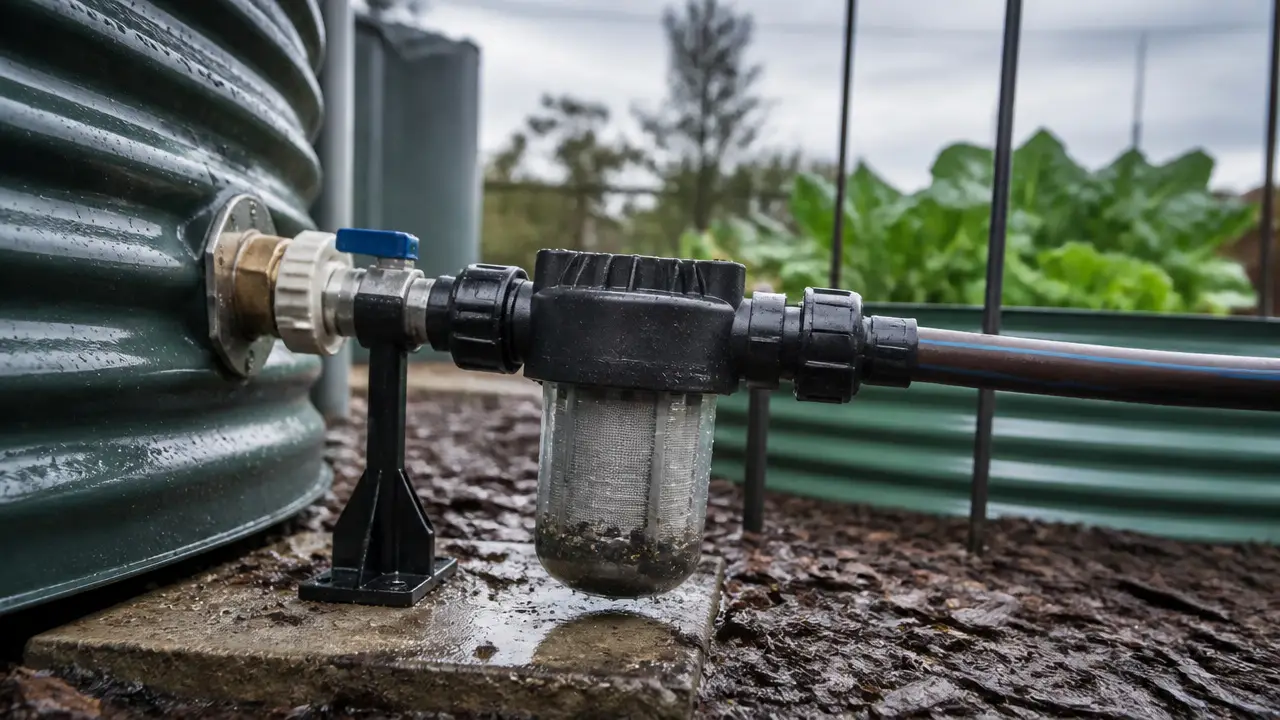
A filter catches particles that could plug small emitter passages.
An emitter controls how quickly water leaves the irrigation line.
Do not assume every system needs the same regulator, filter, or emitter. Check the requirements of the tubing and emitters you plan to use.
Buy the System, Not Just the Individual Parts
Good drip irrigation supplies are only useful when they fit together.
Before ordering, write down the important connection points in your system.
For example:
Outdoor faucet → filter → pressure regulator → adapter → main tubing → smaller tubing or dripline → emitters
Check each connection before buying the next part.
Pay particular attention to three things.
Tubing Dimensions
Drip irrigation tubing can be confusing because names such as "1/2-inch tubing" may refer to a general size rather than one exact outside diameter.
With comparing brand drip irrigation system options, you can understand delivery rates across the connected watering outlets.
A compression fitting must match the actual tubing it is designed to grip.
When possible, buy the main tubing and its compression fittings from the same product family or confirm their actual dimensions.
Thread Types
Garden hose threads and pipe threads are not the same.
A hose faucet commonly uses garden hose threads. Irrigation valves, filters, pumps, and tanks may use pipe threads instead.
An adapter can connect them, but it must have the correct connection on each end.
Pressure and Flow
Pressure is the force pushing water through the system.
Flow rate is the amount of water moving through it during a certain amount of time.
Adding more emitters increases the total flow the system needs. Long tubing runs also make it harder to keep watering even from one end of the line to the other.
Check both factors when planning a large system.
Buying Drip Supplies for a Rainwater System
Drip irrigation can work well with stored rainwater, but do not assume equipment designed for a pressurized household faucet will work the same way on a rain barrel or tank.
A gravity-fed rain barrel may have very little pressure.
Head height is the vertical distance between the water surface in the tank and the irrigation outlet. More height generally creates more gravity pressure.
Some emitters, filters, valves, and pressure regulators need more pressure than a low rain barrel can provide. A conventional pressure regulator can also be unnecessary in a system that already has very low pressure.
For a gravity system, look for irrigation components specifically able to operate at the pressure your setup can provide.
If you use a pump, check:
- Pump pressure
- Available flow
- Required emitter pressure
- Filter flow capacity
- Connection sizes
- Pump protection against running dry
Rainwater can also carry roof grit, organic debris, tank sediment, and other particles. Filtration matters because the small passages inside drip emitters can clog.
Drip irrigation does not make collected rainwater potable, or safe to drink. Water used only for irrigation is generally treated as non-potable, meaning it is not intended for drinking.
Kits vs. Individual Parts
A kit can be a good choice for a small first system because the main parts are more likely to be designed to work together.
Individual components make more sense when:
- The garden has several watering zones
- You need long tubing runs
- Plants need different emitter flow rates
- You already own some of the system
- You are connecting to a rainwater tank
- You need an unusual adapter
- You expect to expand the system later
Before buying a kit, check what it actually contains. You may still need filtration, pressure control, additional tubing, connectors, or an adapter for your water source.
What Makes a Drip Irrigation Supplier Worth Buying From?
The "best" supplier is not simply the store with the largest catalog.
Look for a seller that clearly provides:
- Actual tubing dimensions
- Fitting compatibility information
- Pressure limits
- Emitter flow specifications
- Filter information
- Replacement components
- Installation instructions
- Individual repair parts
Replacement parts are especially important.
A drip system may last through many growing seasons, but emitters can clog, tubing can be damaged, and planting layouts can change. It is much easier to maintain a system when you can buy another matching coupling or end fitting later.
A Practical Buying Strategy
For most homeowners, a good approach is to buy the core system from one irrigation supplier.
Get the tubing, fittings, emitters, filter, regulator, and source adapter together whenever possible. Then use a nearby hardware or farm store for simple extras and emergency repair parts.
If you already have a system, identify the tubing dimensions and connection types before buying anything.
For a rainwater-fed system, start with the water source rather than the emitters. Determine whether the system will operate by gravity or a pump, then choose irrigation equipment that works with the available pressure, flow, filtration, and connection sizes.
A few minutes spent checking those details can save much more time than trying to fix a collection of almost-compatible parts later.
Frequently Asked Questions
Where is the best place to buy drip irrigation supplies?
A specialty drip irrigation store or professional irrigation supply house is usually the best choice for a complete system. Home improvement and farm stores are convenient for common parts and small projects.
Is it better to buy a drip irrigation kit or separate parts?
A kit is often easier for a small, simple garden. Separate parts give you more control over tubing size, emitter flow, filtration, pressure, and layout for larger or unusual systems.
Are all 1/2-inch drip irrigation fittings compatible?
No. Drip tubing described as 1/2 inch can have different actual outside diameters. Check the tubing and fitting dimensions before buying.
Do I need a pressure regulator for drip irrigation?
Many faucet-fed drip systems use one, but the correct choice depends on the pressure requirements of your equipment. A low-pressure gravity-fed rain barrel system may not need one and may not have enough pressure for some standard regulators.
Do I need a filter for drip irrigation?
Filtration is usually important because emitters have small passages that can clog. It is especially useful when irrigation water contains sediment, including water supplied from a rainwater tank.
Can I connect drip irrigation directly to a rain barrel?
Sometimes, but the equipment must work at the low pressure produced by gravity. Standard emitters, valves, filters, or regulators may require more pressure. Check their operating requirements before building the system.
Should I mix drip irrigation parts from different brands?
You can mix some components when their dimensions, threads, pressure limits, and flow requirements match. For tubing and fittings, staying within one compatible system is often easier and reduces the chance of leaks.