As an affiliate, we may earn a commission from qualifying purchases. We get commissions for purchases made through links on this website from Amazon and other third parties.
Vinegar can help clean algae from an empty rain barrel or tank, but adding vinegar to stored rainwater is not a reliable way to stop algae from growing.
Vinegar contains acetic acid. It lowers the water’s pH, which can make conditions less favorable for some algae. But the amount needed will depend on the water, the algae, and the amount of organic material in the tank. Adding enough vinegar to affect algae can also make the water too acidic for some plants and may cause problems with certain system materials.
For rainwater storage, the better fix is to remove the conditions that let algae grow in the first place.
Why Algae Grows in Stored Rainwater
Algae mainly needs three things:
- Light
- Water
- Nutrients
A rain barrel or cistern already provides the water. Sunlight can enter through translucent plastic, an open lid, or gaps around fittings. Nutrients can enter with leaves, pollen, dirt, bird droppings, and other roof debris.
That is why a clear or partly transparent IBC tote often turns green even when the water looked clean when it entered.
Rainwater storage tanks should be opaque so sunlight cannot reach the stored water. Oregon State University Extension and Texas A&M both recommend blocking light as a basic way to limit algae growth.
Can You Put Vinegar Directly in a Rain Barrel?
It is usually better not to add vinegar to a full rain barrel just to control algae.
There is no simple household vinegar dose that works for every rainwater system. A dose that barely changes one barrel could strongly change the pH of another.
This matters if the water will be used for irrigation. Soil and plants have different tolerances for acidic water. Repeatedly adding vinegar can also make it harder to know what condition the stored water is actually in.
Vinegar also does not remove the main cause of the problem. If sunlight continues to enter the barrel, algae can return.
Instead, treat vinegar as a cleaning tool, not as your main algae-control treatment.
Vinegar Is More Useful When Cleaning an Empty Tank
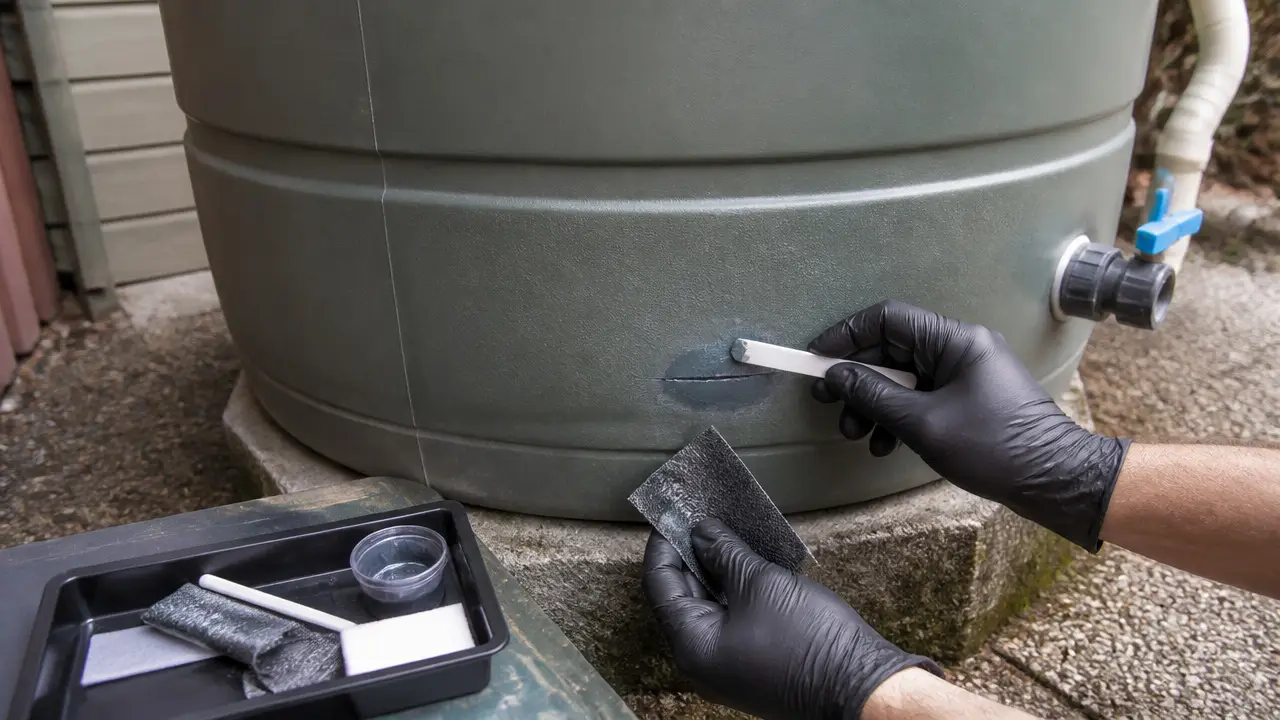
Vinegar can be useful when you are cleaning a rain barrel between uses.
EPA guidance has listed vinegar as a non-toxic cleaner for annual rain-barrel cleaning, and Purdue Extension recommends cleaning cisterns with a dilute bleach or vinegar solution before the growing season.
A practical cleaning process is:
- Empty the barrel.
- Remove loose sediment, leaves, and algae.
- Wash accessible surfaces with water and a suitable cleaning solution.
- Scrub areas with visible buildup when they can be reached safely.
- Rinse the barrel well.
- Fix the reason sunlight or excess debris was entering before filling it again.
Do not climb inside a cistern or large storage tank. Tanks can be confined spaces with serious safety hazards. Clean large tanks from outside where possible or use a qualified service when internal access is required.
Blocking Sunlight Works Better Than Adding Vinegar
For most rain barrels and cisterns, light control is the most important algae-control step.
Check the tank during bright daylight. If you can see light passing through the wall, lid, or fittings, algae has the light it needs to grow.
Possible fixes include:
- Using an opaque storage tank
- Covering a translucent IBC tote with a durable light-blocking cover
- Installing an opaque barrier around the tank
- Closing gaps around the lid
- Keeping inspection openings covered
- Moving a small rain barrel into shade when practical
University of Maryland Extension specifically notes that translucent IBC totes should be covered or otherwise protected from sunlight to prevent algae growth.
Shade helps with temperature, but shade alone may not be enough. An opaque tank is better because indirect sunlight can still reach a translucent container.
Keep Nutrients Out of the Tank
Once light is controlled, reduce the dirt entering the water.
Start at the roof and work toward the tank.
Clean the roof and gutters
Leaves, pollen, seeds, animal waste, and other debris can break down inside stored water. This gives algae more material to use.
Keep gutters and downspouts reasonably clean.
Add inlet screening
Screens keep leaves, insects, and larger debris from entering the tank.
They need regular cleaning. A clogged screen can cause water to back up or spill around the tank.
Consider a first-flush diverter
A first-flush diverter sends the first part of a rainstorm away from the storage tank.
That first runoff can carry a higher load of dirt, germs, and other contaminants that collected on the roof between storms. CDC recommends considering a first-flush device as one way to improve collected rainwater quality.
A first flush does not make the remaining water safe to drink. It is simply one part of keeping the storage system cleaner.
Do Not Let Small Rain Barrels Sit Full for Long Periods
Water that sits unused for long periods can develop algae, odors, sediment, insects, and other water-quality problems.
With practical considerations for white vinegar kill green algae, you can understand the main trade-offs before the next design decision.
For small garden rain barrels, regular water use can help. EPA guidance recommends regularly emptying rain barrels rather than leaving water standing for long periods.
Large cisterns are different because they are designed for longer storage. They depend more heavily on good tank design, light control, inlet filtration, sediment management, and routine inspection.
What If the Rainwater Is Already Green?
Green water usually means you need to correct the storage conditions rather than simply add something to the water.
For a small garden rain barrel:
- Stop new debris from entering.
- Use or drain the existing water as appropriate for its intended non-potable use.
- Empty the barrel.
- Remove algae and sediment.
- Clean and rinse the barrel.
- Block all light from reaching the stored water.
- Clean the inlet screen and gutters.
- Refill it with the next suitable rainfall.
If algae quickly comes back, look carefully for light entering through the tank wall, lid, plumbing openings, or water-level indicator.
What About Algae in an IBC Tote?
IBC totes are a common problem because many have translucent plastic walls.
Putting an IBC tote in partial shade may slow algae, but sunlight can still pass through its walls.
A better setup uses a complete light barrier around the tote while keeping important parts accessible.
Do not permanently cover:
- The outlet valve
- Overflow piping
- Screened vents
- Inspection points that need routine access
Also make sure any cover cannot interfere with ventilation or trap water around components that need to stay dry.
Can You Use Vinegar If the Rainwater Is for Plants?
Using a small amount of vinegar while cleaning an empty barrel is different from regularly adding vinegar to irrigation water.
If you put vinegar directly into stored water, you are changing its pH. The effect depends on the original water chemistry and the amount added.
That makes routine vinegar dosing a poor algae-control method for a garden rainwater system.
Fix sunlight and debris first. Those changes prevent algae without intentionally changing the chemistry of every gallon of irrigation water.
Do Not Use Vinegar to Make Rainwater Drinkable
Vinegar is not a complete rainwater treatment system.
It should not be used as a substitute for proper filtration, disinfection, testing, or other treatment needed for potable water. Potable means water intended to be safe for drinking.
Roof-collected rainwater can contain germs and chemicals even when it looks clear. CDC advises that rainwater used for drinking, cooking, or bathing should be regularly tested for relevant germs and chemicals and treated according to what is actually present.
If a rainwater system supplies household drinking water, algae is only one part of the water-quality problem. The whole system matters, including the roof, gutters, first flush, storage tank, prefiltration, treatment equipment, maintenance, laboratory testing, and applicable local requirements.
The Best Long-Term Algae Control
For most rainwater systems, use this order:
- Block all sunlight from the stored water.
- Keep leaves and roof debris out.
- Maintain screens and inlet filters.
- Use a first-flush system when appropriate.
- Remove accumulated sediment.
- Clean the storage tank as needed.
- Avoid leaving small rain barrels stagnant for long periods.
Vinegar can have a place in the cleaning routine. It should not be the feature that keeps the water algae-free.
A properly shaded, opaque, clean rainwater tank usually gives you much better algae control than repeatedly adding vinegar.
Frequently Asked Questions
Does white vinegar kill algae in a rain barrel?
Vinegar can help remove algae while cleaning an empty rain barrel. Adding it directly to stored water is less predictable and does not fix the sunlight or debris that caused the algae to grow.
How much vinegar should I put in a rain barrel to stop algae?
There is no dependable household dose that is appropriate for every rain barrel. The effect depends on the water chemistry, barrel size, algae, and intended water use. It is better to block sunlight and clean the barrel than to dose the stored water with vinegar.
Will covering a rain barrel stop algae?
A fully opaque cover can greatly reduce algae by keeping sunlight away from the water. Make sure the barrel walls, lid, and openings also block light.
Why does my IBC tote keep turning green?
Most IBC totes have translucent walls. Sunlight passes through the plastic and supports algae growth. Use an opaque tote or a complete light-blocking cover while keeping valves, vents, and service points accessible.
Can I water plants with rainwater that has algae in it?
For ordinary non-potable landscape irrigation, a small amount of algae does not automatically mean the water cannot be used. However, heavy algae can clog screens, valves, pumps, and drip irrigation. Roof runoff may also contain contaminants unrelated to algae, so use the water according to the quality needed for the plants and application.
Does vinegar make rainwater safe to drink?
No. Vinegar does not make roof-collected rainwater potable. Drinking-water use requires suitable collection, treatment for the actual contaminants present, regular maintenance, current water testing, and compliance with applicable local requirements.
How often should I clean a rain barrel?
There is no single schedule for every system. Inspect it regularly and clean it when you see sediment, algae, odor, or other buildup. Small rain barrels may also benefit from being emptied regularly rather than storing stagnant water for long periods.