As an affiliate, we may earn a commission from qualifying purchases. We get commissions for purchases made through links on this website from Amazon and other third parties.
In most cases, you do not need to chemically treat rain-barrel water if you use it for lawns, ornamental plants, or other basic outdoor jobs. You do, however, need to keep the collection system clean and prevent mosquitoes, leaves, animals, and other contamination from getting into the barrel.
The answer changes if the water will touch food, be used inside the home, or be used for drinking. Roof runoff can contain germs, animal waste, dust, metals, and chemicals from roofing materials. Water that looks clear is not necessarily safe.
Treatment Depends on How You Will Use the Water
Think about the final use before deciding whether your rainwater needs treatment.
| Intended use | Typical approach |
|---|---|
| Lawn | Usually no treatment beyond basic screening and barrel maintenance |
| Ornamental plants | Usually no chemical treatment needed |
| Trees and shrubs | Usually no chemical treatment needed |
| Vegetable garden | Use more care because roof runoff can contain contaminants |
| Car washing and outdoor cleaning | Basic screening may be enough, depending on the surface and use |
| Indoor household use | Usually requires additional filtration or treatment designed for that use |
| Bathing | Requires much higher water quality and regular testing |
| Cooking or drinking | Requires a whole-system approach, treatment, testing, and attention to local requirements |
The CDC recommends matching rainwater quality to its intended use. Water used on flowers does not need to meet the same standard as water used for drinking, cooking, or bathing.
For Normal Yard Watering, Focus on Keeping the Barrel Clean
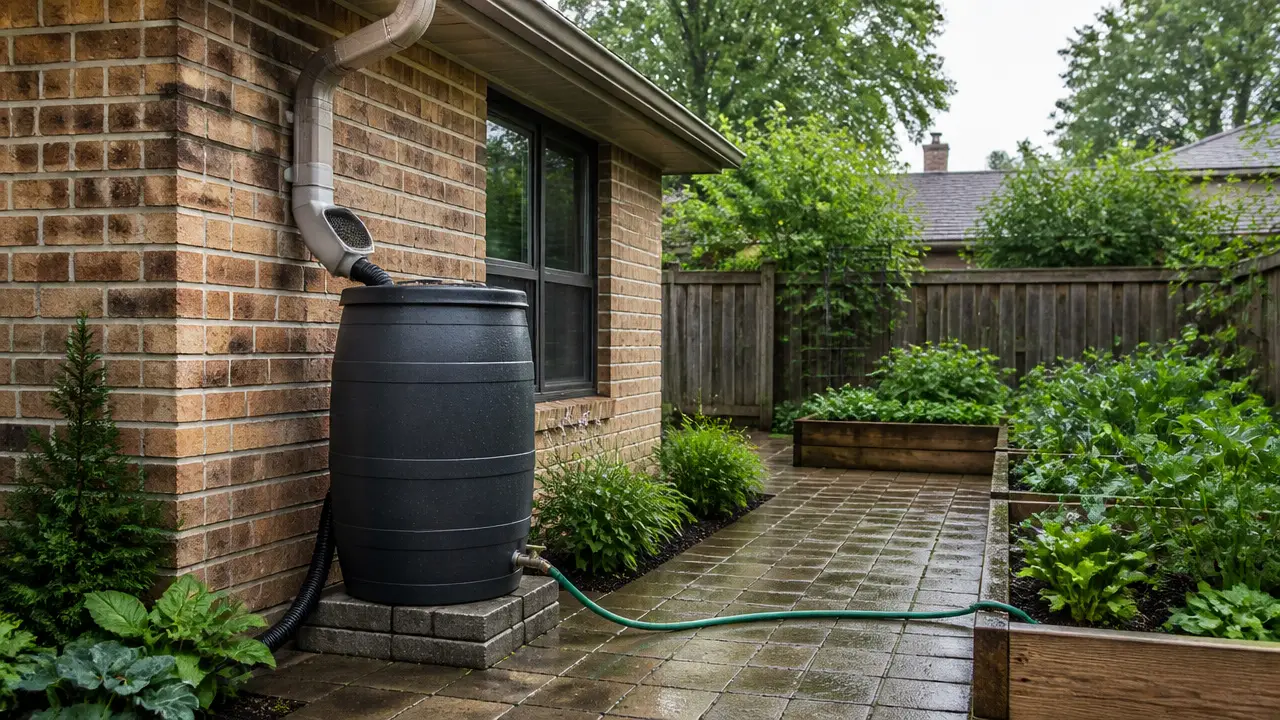
If your rain barrel feeds a hose or watering can for lawns or ornamental plants, treatment is usually less important than good collection and storage practices.
Keep debris out
Install a screen where water enters the barrel. It helps keep out leaves, insects, and larger debris.
Also keep gutters reasonably clean. A barrel will collect whatever washes down from the roof.
Keep mosquitoes out
Rain barrels can become mosquito breeding sites if insects can reach the stored water.
Use a tight lid and screen openings so mosquitoes cannot enter. The CDC recommends tightly covering water-storage containers, including rain barrels. Openings that cannot be covered should have mesh small enough to keep adult mosquitoes out.
If standing water cannot be covered or emptied and the water will not be used for drinking, certain mosquito larvicides may be appropriate. Use only a product labeled for that use and follow its label rather than guessing at a dose.
Remove sediment
Dirt and organic material eventually settle on the bottom of a rain barrel.
Periodically empty the barrel and remove this buildup. How often you need to clean it depends on your roof, gutters, tree cover, rainfall, and how much debris gets through your screens.
A barrel beneath a clean roof and good gutter screens may need much less cleaning than one under trees.
A First Flush Diverter Can Improve Water Quality
A first flush diverter sends the first portion of roof runoff away from your storage barrel.
That first runoff often carries more dust, pollen, bird droppings, and other material that accumulated on the roof between storms. Once the roof has been rinsed, later runoff usually contains less of this material.
The CDC recommends considering a first flush diverter as one way to improve collected rainwater quality. The amount diverted depends partly on the size of the roof collecting the water.
A first flush diverter does not make the remaining water safe to drink. It is a prefiltration step, not complete water treatment.
Do You Need to Add Chlorine or Bleach?
For a basic garden rain barrel, do not assume you need to routinely add bleach or another disinfectant.
Chemical treatment introduces another maintenance step and must be matched to the intended use of the water. Simply adding a disinfectant does not remove every possible contaminant.
For example, disinfection can control certain germs, but it does not necessarily remove metals, roofing chemicals, pesticides, or other chemical contaminants. The CDC notes that even boiling or chlorination cannot make water safe when certain harmful chemicals are present.
For ordinary lawn and ornamental watering, preventing contamination in the first place is generally a more useful starting point:
- Keep gutters reasonably clean.
- Screen the inlet.
- Keep the barrel covered.
- Prevent animals and mosquitoes from entering.
- Remove sediment when needed.
- Consider a first flush diverter.
- Do not allow stagnant water to sit indefinitely if the barrel can be emptied and refreshed.
What About Watering Vegetables?
Roof runoff deserves more caution when it will be used around food.
Rainwater can pick up bacteria from birds and other animals. It can also pick up chemicals from roofing materials and other surfaces. EPA specifically notes that these contaminants should be considered before using rain-barrel water on edible plants.
If you plan to irrigate an edible garden, start by looking at where the water comes from.
Consider:
- The roof material
- Roof coatings or treatments
- Nearby chimneys or exhaust
- Bird and animal activity
- Overhanging trees
- Gutter cleanliness
- Whether runoff passes over metal or treated surfaces
- How long water sits in the barrel
- Whether your irrigation method puts water directly onto edible portions of plants
When there is uncertainty about your roof or local conditions, ask your local health department or agricultural extension service about using roof runoff on food crops.
And always wash produce with water that is suitable for food washing rather than assuming rain-barrel water is clean enough.
What If I Want to Drink the Water?
A standard rain barrel should be treated as a non-potable water source unless it is part of a properly designed drinking-water system.
Potable means suitable for drinking. Non-potable means the water is not intended for drinking.
Rainwater can collect contamination from the air, roof, gutters, pipes, storage tank, insects, animals, and other parts of the system. Even clear water can contain harmful germs or chemicals.
Making roof-collected rainwater potable is not as simple as attaching one filter.
A drinking-water system may need several stages selected for the actual water quality, such as:
- Suitable collection surfaces
- Debris screening
- First flush diversion
- Proper storage
- Sediment control
- Filtration selected for identified contaminants
- Disinfection when required
- Regular maintenance
- Current laboratory testing
Check whether a filter for a rain barrel is necessary to compare the most useful follow-up test for the identified concern.
Different water-treatment methods remove different contaminants. For example, some filters can remove certain parasites but not viruses or dissolved chemicals. Treatment therefore needs to be selected based on what is actually in the water.
If you drink, cook, or bathe with collected rainwater, the CDC recommends regular testing for harmful germs and chemicals and recommends contacting your health department for advice about suitable testing and treatment.
Do not rely on taste, smell, or appearance as proof that the water is safe. Harmful contamination may not noticeably change any of them.
Keep Rainwater Separate From Drinking-Water Plumbing
If your rain barrel or larger rainwater system is connected to plumbing, take cross-connection risks seriously.
Untreated rainwater should not be able to flow backward into pipes carrying treated drinking water. The CDC recommends keeping rainwater separate from piped drinking water because contamination could otherwise enter the treated supply.
A simple barrel with a watering-can spigot is one thing. Connecting rainwater to household plumbing, pumps, pressure tanks, or fixtures is a more complex project.
That is a reasonable point to involve a qualified plumber or rainwater-system professional and check local plumbing and health requirements.
Signs Your Rain Barrel Needs Attention
Treatment is not a substitute for fixing a poorly maintained barrel.
Check the system if you notice:
Bad odors
A strong swampy or rotten smell can mean organic material is decomposing in the barrel.
Emptying and cleaning the barrel may be more useful than trying to mask the problem with chemicals.
Heavy sediment
A layer of sludge means too much material is getting into storage.
Clean the barrel and look upstream. Gutter cleaning, better inlet screening, or a first flush diverter may reduce future buildup.
Mosquitoes
Mosquito larvae mean insects have access to the water.
Check the lid, screens, overflow outlet, downspout connection, and any other openings.
Unusual color or contamination
Do not assume filtration will fix water exposed to paint, fuel, pesticides, roofing chemicals, or another questionable contaminant.
When significant chemical contamination is suspected, discarding the affected water and correcting the source may be safer than trying to treat it.
The Simple Rule
For a basic rain barrel used on your yard, you usually do not need a complex treatment system.
Instead, keep contaminants out, screen the barrel, control mosquitoes, remove sediment, and clean the system when needed.
As the intended use becomes more sensitive, the required water quality rises.
Watering ornamental shrubs is at the low-risk end. Using rainwater for bathing, cooking, or drinking is at the other end and requires much more attention to collection materials, treatment, testing, maintenance, and local requirements.
Frequently Asked Questions
Can I use rain-barrel water directly on my plants?
Usually, yes, for lawns, trees, shrubs, and ornamental plants if the barrel and collection system are reasonably clean. Roof runoff can still contain germs and chemicals, so consider the source and intended use rather than assuming the water is clean.
Should I put bleach in my rain barrel?
Routine bleach treatment is generally unnecessary for a basic barrel used for ornamental garden watering. Disinfection also does not remove every possible chemical contaminant. If treatment is needed for a particular use, choose it based on water quality and follow appropriate guidance rather than adding an estimated amount of disinfectant.
Can I drink rain-barrel water if I run it through a filter?
Do not assume so. Different filters remove different contaminants, and some do not remove viruses or dissolved chemicals. Drinking rainwater requires suitable collection, treatment matched to the contaminants present, regular maintenance, laboratory testing, and compliance with applicable local requirements.
Can I use rain-barrel water on vegetables?
Roof runoff can contain animal waste, bacteria, metals, and chemicals from roofing materials. Consider your roof and collection system carefully before using it around edible plants, and use water suitable for food washing when cleaning harvested produce.
How do I keep mosquitoes out of a rain barrel?
Keep the barrel tightly covered and screen all openings, including the inlet and overflow where practical. Inspect damaged or loose screens regularly. Preventing mosquitoes from reaching the stored water is preferable to allowing them to breed in it.
Does a first flush diverter treat rainwater?
No. A first flush diverter sends the dirtiest early roof runoff away from the barrel, which can improve incoming water quality. It does not disinfect the water or make it potable.
How often should I clean my rain barrel?
There is no single schedule that fits every barrel. Inspect it regularly and clean it when sediment, organic material, odor, or other buildup becomes noticeable. Roof condition, nearby trees, gutter cleanliness, and rainfall frequency all affect how quickly a barrel gets dirty.