As an affiliate, we may earn a commission from qualifying purchases. We get commissions for purchases made through links on this website from Amazon and other third parties.
A rain chain should be long enough to run from the gutter outlet to the place where you want the water to end. For most homes, that means the chain should reach a catch basin, drain, rain barrel inlet, or ground-level anchor without leaving a large gap.
The best way to choose the length is to measure your own downspout drop. Do not choose a rain chain only by the height of the house.
How to Measure the Right Rain Chain Length
Measure vertically from the bottom of the gutter outlet to the final drainage point.
For example:
- If the gutter outlet is 9 feet above a catch basin, you need about 9 feet of usable rain chain.
- If the chain will hang into a basin, include enough length for the bottom of the chain to enter or nearly reach the basin.
- If you plan to anchor the chain near the ground, measure all the way to the anchor point.
It is usually better to have a little extra chain than to come up short. Many rain chains can be shortened by removing links, cups, or sections. Check how your particular chain is assembled before cutting or removing anything.
Where Should the Bottom of the Rain Chain End?
The correct endpoint depends on where the rainwater needs to go.
Catch Basin
A rain chain can end inside a decorative or functional catch basin. The bottom should be close enough to the basin that water follows the chain into it instead of blowing away.
The basin still needs somewhere to send overflow. It may drain into a landscape area, underground drain, or another suitable outlet.
Ground or Drainage Bed
If the water empties onto the ground, the chain can end near a bed of stone or another drainage area.
Do not let roof runoff collect beside the foundation. The drainage area should move or absorb water in a way that protects the house.
Rain Barrel
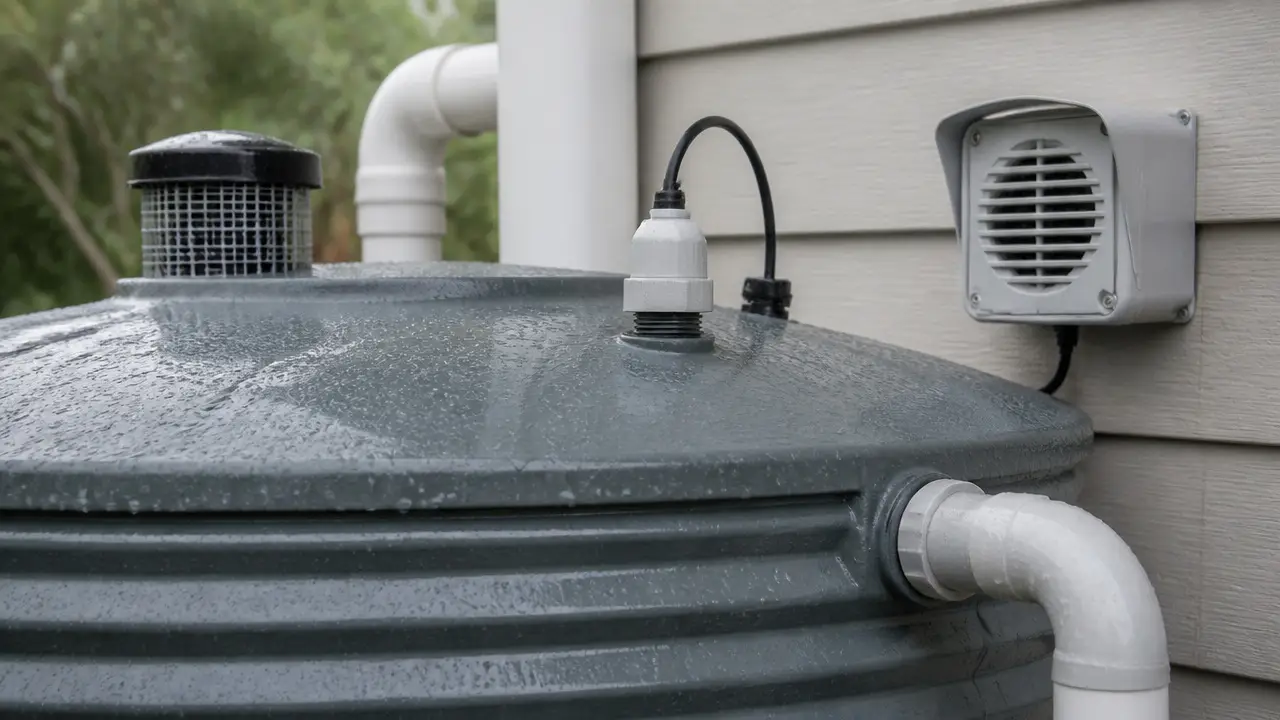
A rain chain can direct water toward a rain barrel, but the connection needs more planning than simply hanging the chain above an open barrel.
The barrel should have:
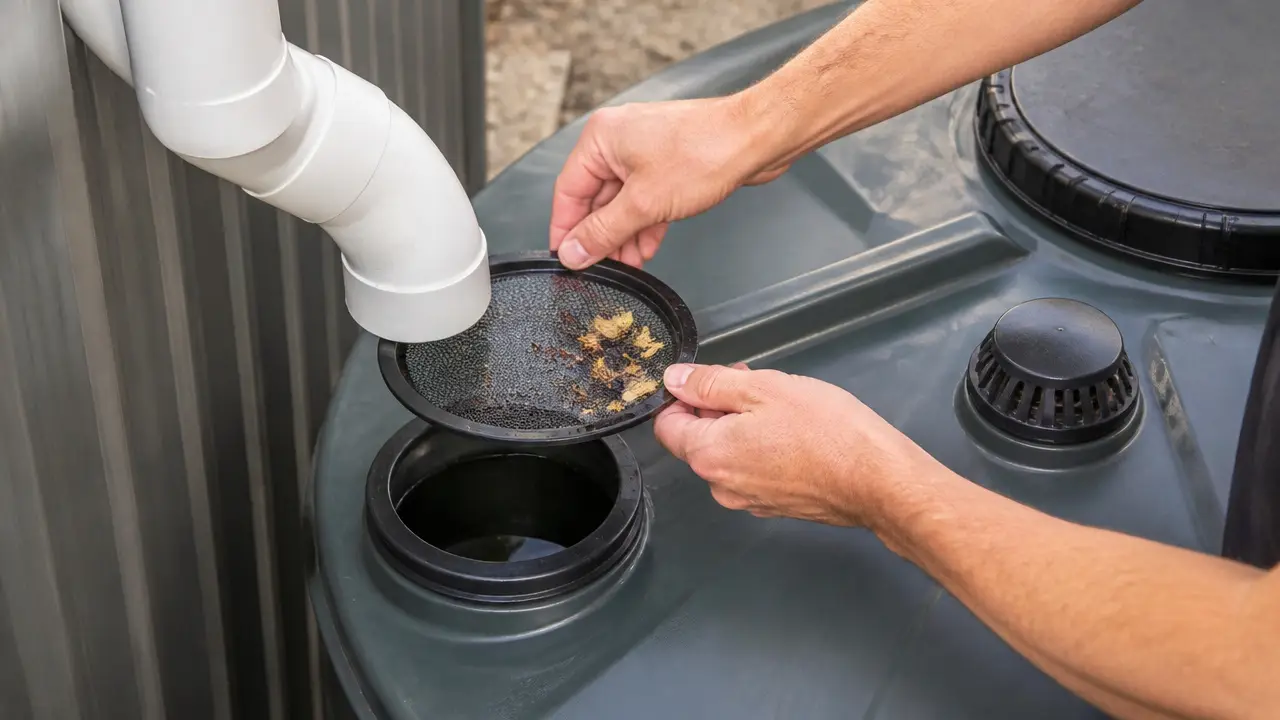
- A screened inlet
- A secure cover
- An overflow outlet
- A stable base
- A drainage plan for overflow
Roof runoff can contain leaves, dirt, animal waste, and other contaminants. A screen helps keep larger debris and mosquitoes out, but it does not make the collected water safe to drink.
Underground Drain
Some rain-chain systems end in a basin connected to an underground drainage pipe. In this setup, measure to the basin rather than to the bottom of the underground pipe.
Should a Rain Chain Touch the Ground?
A rain chain does not have to rest on the ground.
In many installations, the bottom is placed in a basin or connected to an anchor. Keeping some tension on the chain can reduce swinging during wind.
Avoid leaving a long pile of extra chain on the ground. Excess chain can:
- Collect leaves and debris
- Move around during storms
- Interfere with drainage
- Make cleaning harder
If the chain is too long, shortening it is usually cleaner than letting the extra length bunch up.
What Happens If a Rain Chain Is Too Short?
A short rain chain may still move water, but it can create problems near the bottom.
Water may fall from the end of the chain and splash onto:
- Siding
- Walkways
- Soil
- Foundation walls
- Nearby doors or windows
The larger the gap between the chain and the drainage point, the more opportunity there is for wind and splashing to move the water away from its intended path.
If your chain is slightly too short, an extension may be available for compatible chain designs. Otherwise, replacing it with the correct length may give a neater installation.
What Happens If a Rain Chain Is Too Long?
A chain that is a little too long is usually easier to correct than one that is too short.
Depending on the design, you may be able to remove individual links, cups, or sections. Keep enough length for the chain to reach its basin or anchor.
Do not assume every rain chain can be shortened in the same way. Some designs use special connectors that should not be cut randomly.
Does the Rain Chain Need to Hang Straight Down?
A rain chain works best when it has a fairly direct path from the gutter outlet to the drainage point.
A small angle may be workable, but a large sideways run can cause water to leave the chain. Rain chains are designed mainly to guide water downward using gravity.
If the gutter outlet is not above the desired drainage location, changing the outlet location or using conventional piping may work better than trying to pull the chain sideways.
Rain Chain Length for One-Story and Two-Story Homes
Evaluating practical considerations for a rain chain have to be attached to a gutter helps assess inlet design for expected rain intensity and debris.
The number of stories does not tell you the exact chain length.
A one-story home's gutter might be relatively low or quite high depending on the foundation, roof design, and ground level. A two-story home can vary even more.
Measure the actual distance instead of using a standard length based on the number of floors.
Also consider access. A rain chain mounted high above the ground may require a ladder for installation and cleaning. Roof and high-ladder work can lead to serious falls. If the outlet cannot be reached safely from appropriate equipment, use a qualified installer.
Remember the Gutter Outlet
Length is only part of choosing a rain chain. The top connection also needs to fit the gutter opening.
Rain chains usually hang from an outlet or installation piece placed where a downspout would normally connect. The connection should guide water onto the chain rather than letting it spill behind or around it.
Before installing one, check:
- Gutter outlet size
- Rain-chain attachment method
- Available vertical clearance
- Drainage location below
- Expected roof runoff
- Nearby walls and foundations
A rain chain does not increase the drainage capacity of the gutter itself.
Rain Chains and Heavy Rain
A longer chain does not necessarily handle more water.
The amount of runoff depends partly on the roof area draining to that gutter and how hard it is raining. During heavy rain, some rain chains may splash or allow water to spill away from the chain.
If a large roof section drains through one outlet, make sure the entire drainage path can handle the expected runoff. A conventional downspout may be more suitable where controlled, high-capacity drainage is important.
Rain Chains in Windy Areas
Wind can push a long rain chain away from its normal position. The longer and lighter the chain is, the more movement may become noticeable.
A bottom anchor can help keep the chain in place. A catch basin can also provide a controlled endpoint.
Keep the chain away from windows, siding, electrical equipment, and other surfaces that could be damaged by repeated impact or splashing.
Rain Chains in Freezing Climates
Rain chains can collect ice when temperatures fall below freezing. The added weight can place extra stress on the chain, gutter, and mounting point.
Do not assume that anchoring a chain or choosing a certain length will prevent ice problems. Check the chain, gutter, and attachment during freezing weather when it is safe to do so.
Never stand underneath an ice-covered rain chain. Falling ice can cause injury.
A Simple Rule for Choosing Length
Use this process:
- Decide where the rainwater will end.
- Measure from the gutter outlet to that point.
- Include enough chain to reach the basin or anchor properly.
- Choose a chain that can be adjusted if possible.
- Shorten excess length after checking the final installation.
- Test the drainage during rain or with a controlled flow of water from a safe location.
The goal is not to reach a standard number of feet. The goal is to create a continuous path from the gutter to a safe drainage point.
Frequently Asked Questions
How far off the ground should a rain chain be?
There is no required universal height above the ground. The bottom should reach the drainage setup you are using, such as a catch basin or anchor, without leaving a large gap that causes excessive splashing.
Can a rain chain be too long?
Yes. A chain with a large amount of extra length can bunch on the ground and collect debris. If the design allows it, remove unnecessary links or sections.
Can I extend a rain chain that is too short?
Some rain chains can be extended with compatible sections or connectors. Make sure the added section connects securely and matches the existing chain design.
Should a rain chain go all the way into a catch basin?
It can extend into the basin or end close to it. The important point is that water should enter the basin with limited splashing and should have a safe overflow path.
Do I need to anchor the bottom of a rain chain?
Not always, but an anchor can help control movement in windy locations. The anchor should not interfere with drainage or create a trip hazard.
How do I measure a rain chain for a two-story house?
Measure the actual vertical distance from the gutter outlet to the intended basin, drain, or anchor. Do not estimate the length from the number of stories.
Can a rain chain replace any downspout?
Not necessarily. Rain chains can work well in suitable locations, but they may splash during heavy rain and provide less enclosed control than a downspout. Large roof drainage areas or locations where water must be carried well away from the foundation may need a conventional drainage system.